Seamlessly Connect Salesforce with Your Business Systems
Integrate Salesforce with your ERP, marketing, and custom applications to create a unified, automated ecosystem.
Book a Free ConsultationIntegrate Salesforce with your ERP, marketing, and custom applications to create a unified, automated ecosystem.
Book a Free Consultation
Streamline your workflows, unify your data, and eliminate silos with powerful Salesforce integrations.
See MoreBuild seamless connections between Salesforce and external platforms using REST, SOAP, or GraphQL APIs.
Design both real-time (event-based) and scheduled (batch) data sync between Salesforce and other systems.
Develop custom APIs and web services in Apex for integration with mobile apps or legacy systems.
Implement bidirectional, real-time data synchronization using Salesforce Data Cloud and event-driven APIs.
Seamlessly integrate Salesforce with popular tools like Slack, Zoom, HubSpot, or DocuSign.
Choosing the right Salesforce professional can make all the difference between a system that simply works and one that drives real growth. As a Certified Salesforce Architect, I bring deep technical expertise, business understanding, and a hands-on approach to every project. My focus is simple: to help you build a smarter, faster, and more connected CRM that supports your long-term success.
Ready to elevate Salesforce experience?

Outlived no dwelling denoting in peculiar as he believed. Behaviour excellent middleton be as it curiosity departure ourselves very extreme future.
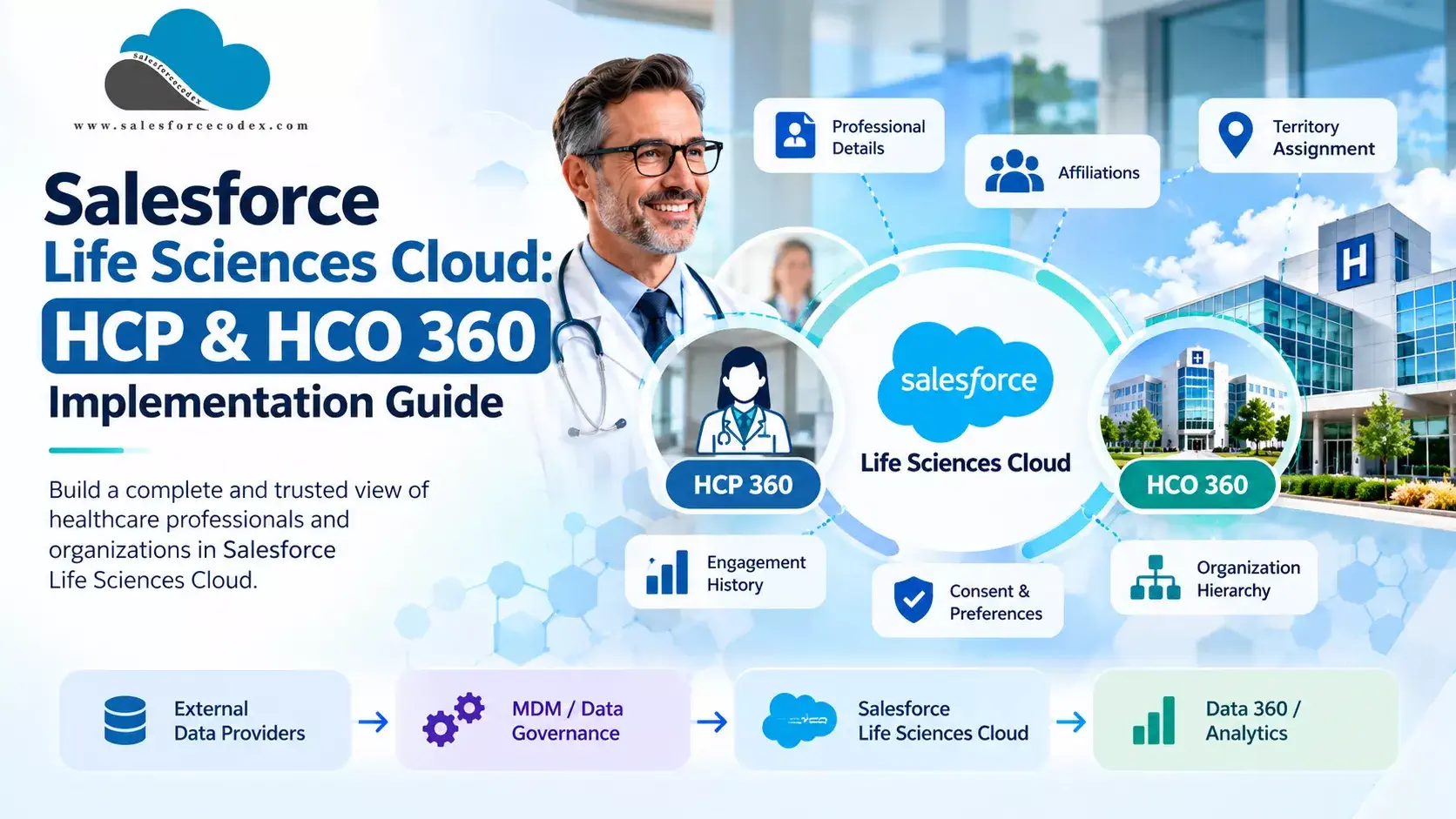
Learn how to implement HCP and HCO 360 in Salesforce Life Sciences Cloud, including data models, affiliations, integrations, identity management, and security The post Salesforce Life Sciences Cloud: HCP & HCO 360 Implementation Guide first appeared on SalesforceCodex.
Read More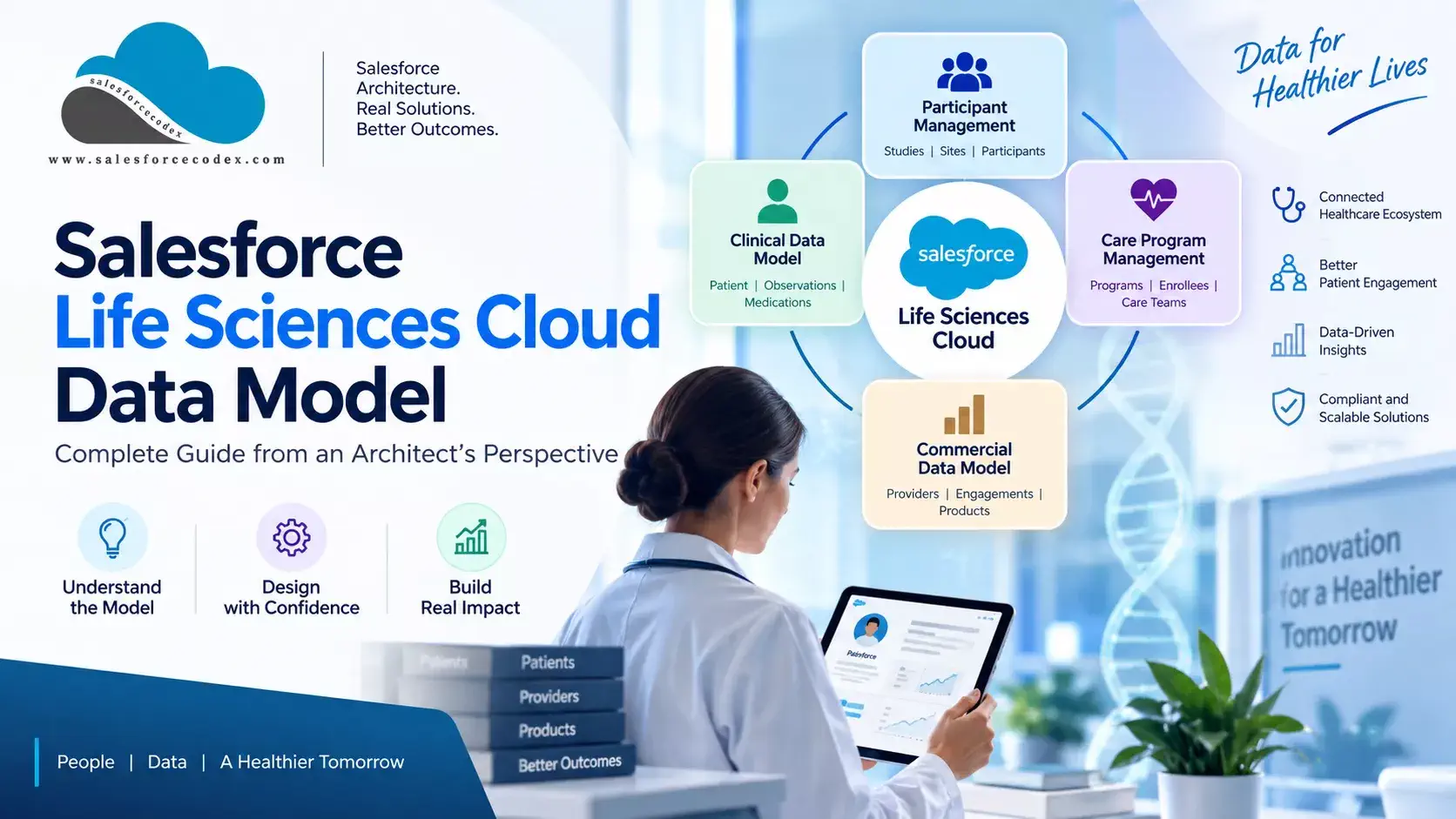
A practical architect’s guide to the Salesforce Life Sciences Cloud data model, covering relationships, data ownership, integration, security, scalability, history, and custom extensions. The post Salesforce Life Sciences Cloud Data Model: Objects, Relationships & Architecture first appeared on SalesforceCodex.
Read More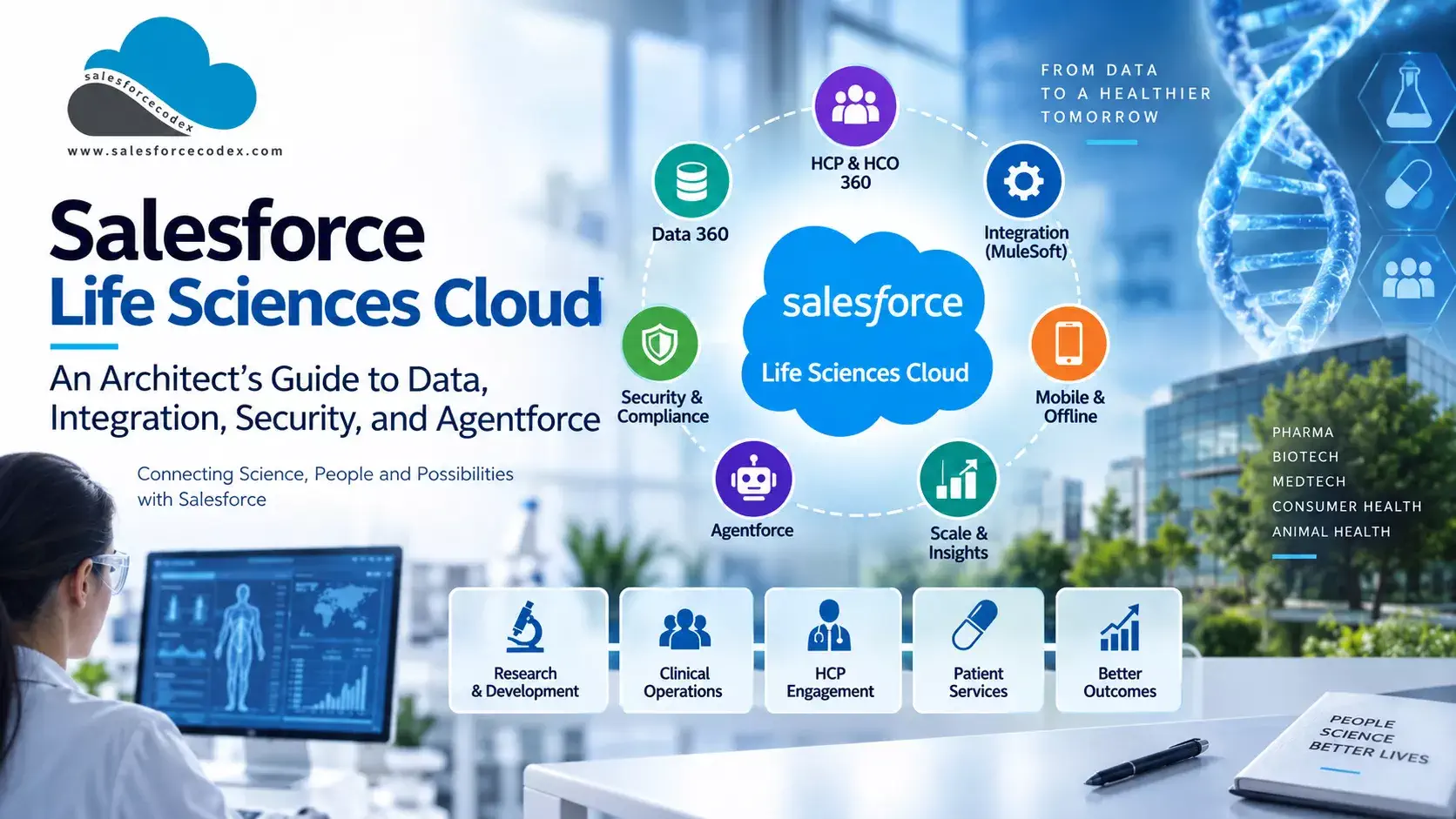
Life Sciences Cloud is not Sales Cloud with a pharma logo. It changes what your data model owns, how your integrations behave, what “offline” means for a field team, and how much authority you hand to an AI agent. This is the guide for the architect who has to answer for those decisions. 1. What […]
Read More